Health and Safety Policy for Landscaping Eltham
 This health and safety policy sets out the standards and responsibilities that support safe, consistent, and professional landscaping in Eltham. It applies to all activities carried out by staff, contractors, and anyone working on behalf of the business. The aim is to prevent injury, reduce risk, and maintain a safe working environment while delivering high-quality outdoor services. Every task, from routine maintenance to more complex ground works, must be planned with care and completed in a way that protects people, property, and the environment.
We recognise that landscaping work can involve moving equipment, lifting heavy materials, using sharp tools, working near traffic, and operating machinery in changing weather conditions. Because of this, safe working practices are treated as a core part of everyday operations rather than a separate activity. Risk awareness, proper supervision, and clear communication are expected at all times. All personnel are required to take reasonable steps to protect themselves and others, report hazards promptly, and follow site-specific instructions without exception.
 The policy is designed to support a proactive approach to safety across all landscaping services. This includes garden maintenance, planting, turf care, tree and shrub work, fencing, hard landscaping, and site clearance. Before any work begins, suitable assessments must be made to identify hazards such as uneven ground, buried services, slippery surfaces, falling objects, or the presence of members of the public. Controls are then put in place to reduce risk to an acceptable level.
Responsibilities and Safe Working Standards
Management is responsible for providing safe systems of work, appropriate training, and suitable equipment for the tasks being undertaken. Supervisors must ensure that workers understand the work plan, use equipment correctly, and stop work if conditions become unsafe. Employees and contractors are expected to cooperate with safety measures, wear required protective clothing, and maintain equipment in good condition. No one should take shortcuts that could place themselves or others at risk.
Training is an essential part of this policy. Workers must be competent in the tasks assigned to them and familiar with the safe use of machinery, hand tools, lifting methods, and fuel handling procedures. Where specialist equipment is used, only trained and authorised personnel may operate it. Refresher instruction should be provided when work methods change or when new risks are identified. A well-trained team is less likely to make avoidable mistakes and more able to respond calmly in unexpected situations.
 Personal protective equipment, or PPE, must be worn when required and kept in a condition that remains effective. Depending on the task, this may include safety boots, gloves, eye protection, hearing protection, high-visibility clothing, and protective trousers. PPE does not replace safe methods, but it adds an important layer of protection. All workers should inspect their equipment before use and report damage or defects immediately so replacements can be arranged without delay.
Risk Control in Day-to-Day Landscaping Work
Good site preparation is vital for safe landscaping operations. Areas should be checked for access issues, unstable surfaces, sharp debris, hidden obstacles, overhead hazards, and weather-related risks. If public access is possible, barriers or warning signs should be used where needed to prevent unnecessary exposure. Working areas should be kept as tidy as reasonably possible, with tools stored safely and waste removed promptly to avoid trips and falls.
Manual handling is a common cause of strain and injury in landscaping work. Heavy items such as soil bags, paving materials, timber, and equipment must be moved using suitable methods and, where possible, mechanical aids. Workers should assess the load, plan the route, and seek assistance for awkward or excessive weights. Safe lifting technique, sensible pacing, and good teamwork help reduce the risk of back injuries and other musculoskeletal problems.
Machinery and tools must only be used when they are fit for purpose and properly maintained. Guards, switches, blades, cables, and fuel systems should be checked before use. Defective equipment must be withdrawn from service until repaired. Operators should remain alert, avoid distractions, and follow the manufacturer’s instructions at all times. Extra caution is required when working near children, pedestrians, vehicles, or other trades. The goal is to keep every landscaping task controlled, predictable, and safe.
Incident Reporting, Environmental Care, and Review
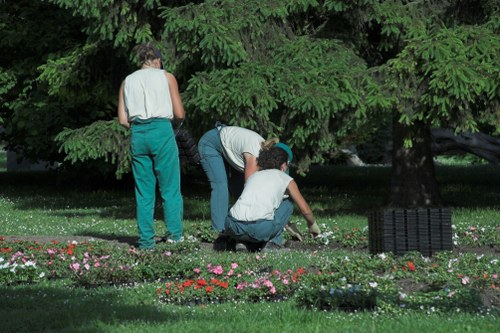 Accidents, near misses, hazards, and unsafe practices must be reported as soon as possible so they can be investigated and addressed. Prompt reporting helps prevent repeat incidents and supports continuous improvement. Where an injury occurs, first aid should be provided immediately and emergency action taken if needed. Records of incidents should be reviewed to identify patterns and strengthen preventive controls. Safety information must be shared clearly so lessons are understood and applied.
Environmental conditions can change quickly, and landscaping work must adapt accordingly. Hot weather, heavy rain, frost, strong winds, and low visibility can all create additional hazards. Work should be paused or adjusted when conditions make tasks unsafe. Attention should also be given to fuel storage, waste handling, noise, dust, and the protection of plants and wildlife where relevant. A responsible landscaping service balances productivity with care for the surroundings and the people within them.
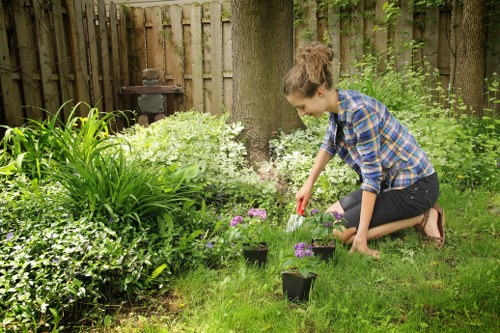 This policy will be reviewed regularly to ensure it remains effective, practical, and aligned with the nature of the work being carried out. Updates may be made following incidents, changes in equipment, new procedures, or feedback from risk reviews. Every person involved in landscaping services is expected to support this policy, follow safe practices, and contribute to a culture where health and safety are treated as fundamental to quality work. Through shared responsibility and consistent standards, landscaping operations can be delivered safely, efficiently, and with confidence.